

What if the vision test for driver's license washington state applicants take is only one checkpoint, separate from the knowledge and driving tests? It’s understandable to wonder whether your eyesight or glasses could affect your eligibility, especially when the screening process and current requirements aren’t always clear.
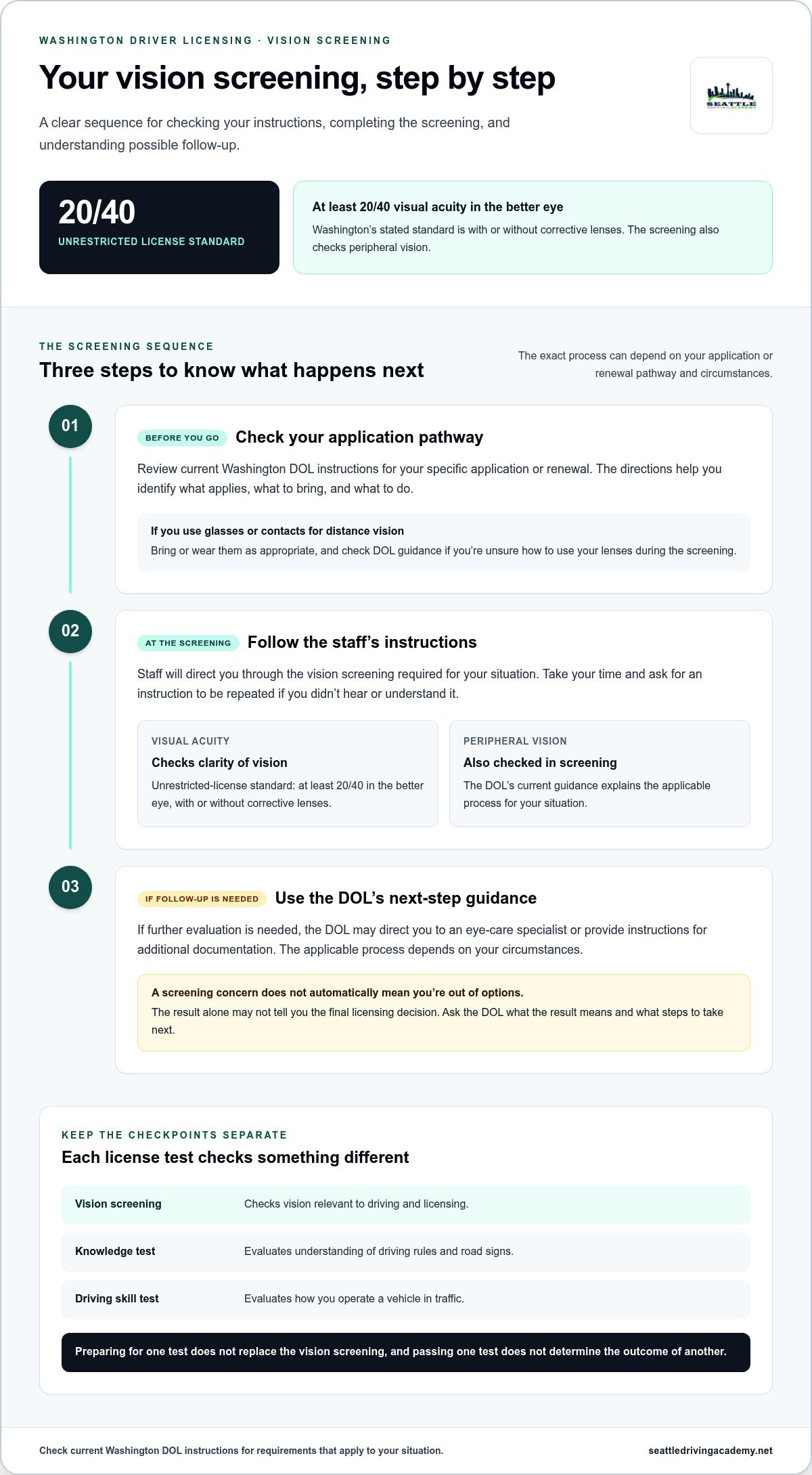
Washington’s Department of Licensing uses a vision screening to check visual acuity and peripheral vision. For an unrestricted license, the state’s stated standard is at least 20/40 visual acuity in the better eye, with or without corrective lenses. If your screening raises concerns, further evaluation may be needed. A result doesn’t automatically mean you’re out of options.
This guide explains what the screening checks, how to prepare, and where to find current DOL requirements. It also covers how vision screening differs from the knowledge and driving tests, and what to consider if you wear corrective lenses or have concerns about your eyesight. For separate knowledge or driving test preparation in Seattle, Seattle Driving Academy offers instruction and DOL testing.
Key Takeaways
- The vision test for driver's license washington state applicants take is a licensing screening, separate from the knowledge test and driving skill test.
- Know what the screening checks and review current Washington DOL instructions for your application or renewal.
- Wearing glasses or contacts doesn’t automatically determine eligibility. Follow DOL guidance for your situation.
- Prepare by reviewing official instructions and bringing or wearing what they specify, including your usual corrective lenses if applicable.
- If you have questions about a screening result or possible restrictions, use Washington DOL guidance to understand your next steps.
What Is the Washington State Driver’s License Vision Test?
The Washington driver’s license vision test is a screening to check whether an applicant’s vision meets the state’s requirements for driving. It can identify when additional guidance or evaluation may be needed, but it does not test driving knowledge or vehicle-handling ability.
If you’re preparing for the vision test for driver's license washington state applicants take, keep one distinction in mind: the screening is a separate licensing checkpoint. Washington’s stated standard for an unrestricted license is at least 20/40 visual acuity in the better eye, with or without corrective lenses. Other steps or follow-up may depend on your circumstances. The Washington State Department of Licensing (DOL) is responsible for driver licensing, so use its current instructions for requirements that apply to your application.
What Does the Screening Assess?
Vision plays a practical role in driving. Clear sight helps you notice road signs and signals, recognize pedestrians, and respond to hazards around you. Washington’s screening checks visual acuity and peripheral vision. The DOL’s current guidance explains the applicable process and any follow-up that may be needed.
If you have concerns about your eyesight, corrective lenses, or whether you may need further evaluation, review the DOL’s current instructions. For questions about changes in your vision or eye care, speak with a qualified eye-care professional.
How Is It Different From Other License Tests?
Each test checks a different part of readiness to drive:
- Vision screening: Checks vision relevant to driving and licensing.
- Knowledge test: Evaluates your understanding of driving rules and road signs.
- Driving skill test: Evaluates how you operate a vehicle in traffic.
Studying the driver guide can help you prepare for the knowledge test, while supervised practice and lessons can build driving skills. Neither replaces the vision screening, and passing one test doesn’t determine the outcome of another. For help understanding where the separate knowledge and driving tests fit into your plans, read Choosing the Right Driver License Testing Center: Your Guide to Success in Seattle.
Knowing which checkpoint you’re preparing for makes it easier to choose the right preparation. Check current DOL instructions for your application pathway, and follow any vision-related directions specific to your situation.
What to Expect During a Washington Driver’s License Vision Screening
A little preparation can make the screening feel straightforward. The process and instructions can vary with your application or renewal pathway, so start with the Washington DOL’s current Washington State vision screening guidance. It explains what applies to your situation and what follow-up may be needed.
Before You Arrive at a Washington Licensing Office
Review the DOL instructions for your specific application before you go. Don’t assume every applicant follows the same steps or needs the same documents, appointment, or payment. The official guidance helps you identify what to bring and what to do for your situation.
If you normally use glasses or contact lenses for distance vision, bring or wear them as appropriate. This helps you follow the screening instructions using the correction you typically rely on. Check the DOL’s current guidance if you’re unsure how to use your lenses during the screening.
During and After the Screening
The screening is a licensing step, not a knowledge quiz or driving lesson. Follow staff directions, take your time, and ask them to repeat an instruction if you didn’t hear or understand it. The specific steps can depend on your application process and circumstances.
As a general overview, the process involves three steps:
- Check your pathway. Review current DOL instructions for your application or renewal.
- Follow the screening instructions. Staff will direct you through the vision screening required for your situation.
- Follow any next-step guidance. If further evaluation is needed, the DOL may direct you to an eye-care specialist or provide instructions for additional documentation. The applicable process depends on your circumstances.
This overview doesn’t replace directions for your specific license pathway. If the screening raises a concern, the result alone may not tell you what the final licensing decision will be. Ask the DOL what the result means and what steps to take next. For information about retesting or possible restrictions, rely on current official instructions rather than old advice.
Once you’ve reviewed the vision requirements, prepare separately for the knowledge or driving skill test. Seattle Driving Academy offers driver training and test preparation in Seattle.
Glasses, Contacts, and Vision Concerns: What Washington Applicants Should Know
Wearing glasses or contact lenses doesn’t automatically prevent you from applying for a Washington driver’s license. Corrective lenses can be part of how you meet the state’s vision requirements. Washington’s rules describe a visual acuity standard of 20/40 in the better eye, with or without corrective lenses. Review Washington's official vision standards and current Department of Licensing (DOL) guidance to understand how they apply to your situation.
If you’re concerned about the vision test for driver's license washington state applicants take, don’t guess about eligibility based on your prescription or someone else’s screening experience. Your circumstances may call for specific follow-up. The appropriate licensing authority determines what a result means for your application and whether a license condition applies.
Should You Wear Your Glasses or Contact Lenses?
If you rely on glasses or contacts to see clearly at a distance, bring or wear your usual corrective lenses and follow the DOL’s current instructions about using them during screening. Don’t assume how lenses will be recorded on your license or whether a particular condition will apply. Confirm those details with the DOL. Wearing corrective lenses is not, by itself, a reason to conclude you’re ineligible.
What If You Are Worried About Your Vision?
Vision changes deserve attention, but they don’t answer licensing questions on their own. If your eyesight has changed or you’re unsure whether your current correction is adequate, discuss your concerns with a qualified eye-care professional. They can assess your vision and explain options for your eye health. That advice is separate from a driver licensing decision.
If the screening prompts questions about a referral, additional evaluation, or a possible restriction, use the DOL’s latest instructions for your application pathway. The process and outcome depend on your circumstances, so avoid relying on anecdotes or assumptions. Ask the licensing authority what documentation or next steps apply to you.
Use professional eye-care advice for concerns about your vision and current DOL guidance for licensing decisions. This helps you prepare without treating uncertainty as a final decision about eligibility.
How to Prepare for the Washington State Vision Test
Preparing for the vision screening is less about studying and more about arriving with the right information and following current instructions. Steps may vary by license type and application stage, so review Washington Department of Licensing (DOL) guidance before you go. An informal home test can’t predict an official screening result.
A Simple Checklist Before Your Appointment
Use this checklist to get organized without guessing about requirements:
- Review the instructions for your situation. Check the current DOL vision screening guidance for your license type and application stage. Confirm where and how the screening takes place.
- Bring your usual corrective lenses. If you rely on prescribed glasses or contact lenses for clear distance vision, bring them and follow DOL directions about using them during screening.
- Check application details. Review official instructions for what to bring and any steps that apply to your application. Document, appointment, and fee requirements may differ by applicant.
- Resolve questions with the licensing authority. If an instruction is unclear, ask the DOL before attending rather than relying on someone else’s experience.
That’s a practical way to approach the vision test for driver's license washington state applicants take: follow current instructions, use the lenses you depend on as directed, and let the licensing authority determine how the requirements apply to you.
Prepare for the Other Licensing Steps, Too
Keep vision screening separate from the other parts of licensing. It doesn’t call for the same preparation as the knowledge test, which involves learning driving rules, or the driving skill test, which involves demonstrating vehicle control. Studying practice questions won’t prepare you for a vision screening, and driving practice won’t replace it.
For written-test logistics, read Seattle DOL Knowledge Test Locations: Your 2026 Guide to Passing. For behind-the-wheel readiness, lessons and pre-test warm-up practice can help you build familiarity and confidence. Each supports a different part of the licensing process, so prepare for each step on its own.
If you’re ready to build driving skills alongside your licensing preparation, schedule a driving lesson or pre-test warm-up with Seattle Driving Academy. Practice can help you feel more prepared for the driving skill test, while DOL guidance remains the source for vision-screening instructions.
After the Vision Screening: Your Next Steps Toward a Washington License
Your next step depends on your screening result, application pathway, and current Washington Department of Licensing (DOL) instructions. If you’re unsure what a result means or whether a condition or restriction applies, contact the DOL for direction. Don’t infer your eligibility from another driver’s experience. For the vision test for driver's license washington state applicants take, the licensing authority is the source for decisions about individual cases.
Where to Verify Current Washington Requirements
Start with the DOL’s medical and vision screening guidance, then review the Washington Driver Guide for information that applies to your license type and application stage. If you receive follow-up instructions, use those rather than general advice. Procedures can change, so confirm current requirements and process details with the DOL.
Keep your questions focused: ask the DOL what your result means, whether additional evaluation or documentation is needed, and which instructions apply to your application. An eye-care professional can address your vision and any recommended care, while the DOL determines licensing requirements and outcomes.
Get Support for Knowledge and Driving Tests in Seattle
The vision screening is separate from the remaining license milestones. Seattle Driving Academy is an authorized testing center for DOL knowledge and driving skill exams. Individual lessons and pre-test warm-up practice can also help you prepare for the driving skill test, but they don’t replace vision screening or determine its outcome.
Take the process one step at a time. Confirm vision-related next steps with the DOL, then prepare for the other tests at your own pace. For knowledge-test preparation, a driving skill test, or behind-the-wheel practice in Seattle, explore Seattle Driving Academy’s testing and lesson options.
Take Your Next Licensing Step with Confidence
The vision test for driver's license washington state applicants take is one checkpoint in the licensing process, separate from the knowledge and driving skill tests. Check current Washington Department of Licensing guidance for instructions that apply to your situation, and use your usual corrective lenses as directed. If you have questions about a screening result or possible restrictions, the DOL can clarify your licensing next steps.
Prepare for each remaining milestone in its own way. Seattle Driving Academy is an authorized center for DOL knowledge and driving skill tests, and offers individual lessons and pre-test warm-up practice for teen and adult learners. These services can help you build readiness, but licensing outcomes depend on meeting the applicable requirements.
Explore Seattle Driving Academy’s testing and lesson support as you get ready for what comes next. For knowledge-test and driving-test support in Seattle, the academy can help you plan your next step.
Frequently Asked Questions
Does Washington State require a vision test for a driver’s license?
Washington licensing applicants may need to complete a vision screening, but the process can depend on the license type and application circumstances. Check current Washington Department of Licensing (DOL) instructions before your appointment, since requirements can change. Follow the vision screening instructions that apply to your specific pathway, rather than relying on an old checklist or assuming a threshold applies in every situation.
What does the Washington driver’s license vision test check?
The screening assesses vision relevant to driving, including visual acuity and peripheral vision. It is separate from the knowledge test and driving skill test. Washington’s stated standard for an unrestricted license is at least 20/40 visual acuity in the better eye, with or without corrective lenses. If you have concerns about your eyesight, an eye-care professional can advise you about your vision. The DOL determines the licensing requirements that apply to your application.
Can I wear glasses or contacts during a Washington vision test?
If you normally rely on glasses or contact lenses to see clearly at a distance, bring them and use them as directed by current licensing instructions. Corrective lenses don’t automatically settle questions about eligibility or license conditions. How they may be reflected on a license depends on the rules and your circumstances. Check current Washington DOL guidance rather than assuming whether a restriction will apply or how it will be recorded.
What happens if I do not meet the vision screening standard?
Don’t assume the outcome or next step based on general online advice. The Washington DOL can explain the current procedure for your situation, including whether further evaluation or another step applies. If your vision has changed, discuss it with an eye-care professional, who can advise you about your eyesight. Licensing eligibility and any license conditions are determined by the appropriate authority based on the applicable requirements and your circumstances.
Is the Washington vision test the same as the knowledge test?
No. A vision screening concerns sight relevant to driving. The knowledge test assesses your understanding of driving rules and signs, while the driving skill test evaluates vehicle operation. Each checks a different part of the licensing process, so prepare for them separately. Follow current Washington DOL instructions for the vision screening and your license pathway, and use appropriate study or driving practice to prepare for the other tests.
How should I prepare for a driver’s license vision test in Washington?
Check the latest Washington DOL instructions for your application type and stage. If you use corrective lenses, bring the glasses or contacts you normally rely on and follow official directions about using them. During the screening, listen to staff instructions. Informal online or at-home tests can’t predict an official result. If you’re concerned about a change in your eyesight, seek advice from an eye-care professional rather than guessing about licensing eligibility.
Where can I get help preparing for Washington’s knowledge or driving test in Seattle?
Seattle Driving Academy is an authorized testing center for DOL knowledge and driving skill exams. Teen and adult learners can also take individual driving lessons or use pre-test warm-up practice to build readiness for the driving test. These services support preparation, but they don’t replace a vision screening or determine vision-related licensing outcomes. For official requirements, use Washington DOL guidance. For test and lesson support in Seattle, explore the academy’s options.


