

What if the clearest sign your teen could benefit from a driving instructor isn’t one major mistake, but the same uncertainty on drive after drive? If you’re wondering when to hire a driving instructor for my teen, you’re not alone. Family practice is valuable, but it can be hard to tell whether your teen needs more repetition, a different approach, or professional guidance, especially when nerves or habits make each trip stressful.
A professional instructor doesn’t have to replace your time in the passenger seat. Lessons can complement supervised practice, help your teen build skills with structured feedback, and give you both a clearer plan for progress. This guide covers signs that professional instruction could help, how lessons can work alongside family practice, and how to check Washington’s current licensing requirements with the Department of Licensing.
Seattle families can explore options such as individual driving lessons and Seattle Driving Academy’s Teen Complete Package. The right next step depends on what your teen needs now, not on a one-size-fits-all timeline.
Key Takeaways
- Look for patterns in your teen’s driving, not a specific age or deadline, to identify where more guidance may help.
- Ask what a professional instructor can assess and how structured feedback could shape your teen’s next practice goals.
- Use family practice and professional lessons for different purposes. You don’t have to choose only one.
- To decide when to hire a driving instructor for my teen, identify the learning need, check current eligibility requirements, and discuss goals before exploring lessons.
- Seattle families can explore Seattle Driving Academy’s Teen Complete Package or individual driving lessons as possible next steps.
When should you hire a driving instructor for your teen? Start with readiness, not a deadline
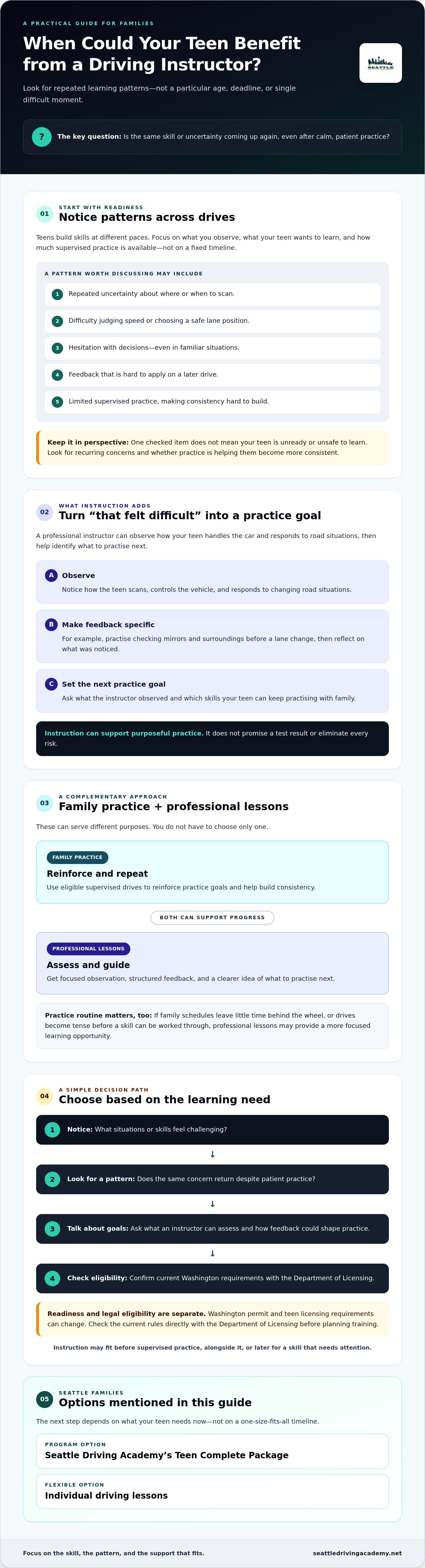
Teens don’t all gain driving skills at the same pace. One may feel comfortable with basic controls but need more practice making decisions in busy traffic. Another may be cautious at first and improve steadily with calm repetition. To decide when to hire a driving instructor for my teen, focus on what you observe, what your teen wants to learn, and how much supervised practice is available, rather than relying on age or a fixed timeline.
Notice whether your teen can apply feedback on the next drive. Do they remember to scan before changing lanes, adjust speed for conditions, and maintain a steady lane position? Are their decisions at intersections becoming more deliberate? A single missed signal or hesitant turn is part of learning. A recurring difficulty, or a skill that isn’t improving despite patient practice, may be a reason to seek another perspective.
Consider the practice routine, too. If family schedules leave little time behind the wheel, or drives become tense before your teen can work through a skill, professional lessons may provide a more focused learning opportunity. Driver’s education can include classroom learning and practical driving instruction. The driver's education overview explains common components and background.
What signs suggest your teen could benefit from lessons?
Use this checklist to look for patterns across several drives, not just one challenging moment:
- Your teen repeatedly seems unsure where or when to scan.
- They struggle to judge speed or choose a safe lane position.
- They have difficulty making decisions, even in familiar situations.
- They find it hard to use feedback on a later drive.
- Limited supervised practice makes it difficult to build consistency.
One checked item doesn’t mean your teen is unready or unsafe to learn. Look for patterns and progress. Are they becoming more consistent when practice is calm and focused? If the same concern keeps returning, a patient instructor can offer another perspective and help identify what to practise next.
Is there a right age or point in the learning process?
Legal eligibility and personal readiness are separate questions. Washington’s permit and teen licensing requirements can change, so confirm the current rules directly with the Department of Licensing before planning training. There isn’t one ideal age or set number of lessons that fits every teen.
Families can consider instruction before supervised practice begins, alongside it, or later when a particular skill needs attention. The useful question is what would help your teen make steady progress now. If you’re unsure, note the situations that feel challenging and use them to guide a conversation about suitable instruction.
How a driving instructor helps teens build skills and confidence
A driving instructor offers focused guidance: they observe how a teen handles the car and responds to road situations, then explain what to practise next. That outside perspective can be useful when parent and teen aren’t sure how to turn “that felt difficult” into a specific learning goal. Instruction doesn’t promise a test result or eliminate every risk. It can make practice more purposeful.
Structured feedback connects an action with its effect. Instead of a general reminder to “pay attention,” for example, an instructor might help a teen practise checking mirrors and surroundings before a lane change, then reflect on what they noticed. A parent can reinforce those goals during eligible supervised driving practice, so lessons and family drives support the same learning process.
What can a professional instructor teach that is hard to practise alone?
Instruction can help teens build repeatable observation routines, recognize potential hazards, manage vehicle control, and make decisions calmly. An instructor may also notice patterns a parent could miss, such as a teen checking mirrors but not following through with a shoulder check, or focusing on steering while overlooking changing traffic conditions.
Seattle drives can present different situations depending on the route, time, and traffic. A useful learning plan responds to the teen’s current skills rather than assuming every street or lesson will be the same. Ask what the instructor observes and which skills your teen should continue practising with family.
How can lessons support a nervous or easily overwhelmed teen?
For a nervous learner, breaking a skill into manageable steps can make practice feel less daunting. A teen might first talk through what to look for, then practise in a suitable setting, and later build toward more complex situations as they’re ready. Progress varies, and taking lessons doesn’t guarantee confidence.
Before instruction begins, tell the instructor what tends to feel overwhelming and ask how feedback is given. Does your teen prefer a short explanation before trying a maneuver, or a calm review afterward? Sharing those preferences can help set a supportive tone. Seattle families exploring options can review Seattle teen driving instruction and ask which available option may fit their teen’s learning goals.
After a lesson, invite your teen to name one skill that feels clearer and one they want to practise again. That reflection gives family practice a focus. Confirm current Washington requirements for supervised driving with the Department of Licensing.
Parent practice vs. a professional driving instructor: how to choose the right mix
Family practice and professional instruction serve different purposes. A parent or other eligible supervising adult brings familiarity and can help a teen repeat agreed goals over time. An instructor brings a structured teaching perspective and focused feedback. Choosing professional lessons doesn’t mean you’ve failed as a parent. It means adding support where it may help your teen learn.
Use this comparison to decide what kind of support fits the next learning goal:
- Purpose: Family practice reinforces skills in everyday drives. Professional instruction can focus on a particular skill gap or a structured learning plan.
- Feedback: A familiar adult knows the teen well, but emotions can make coaching harder. An instructor may offer a different perspective and clear practice points.
- Familiarity: Family drives take place with people the teen knows. Lessons introduce guidance from someone outside the family.
- Structure: Parents can keep practice goals going between lessons. An instructor can help identify what to work on and practise next.
The right mix can change as your teen progresses. Ask what they need help with now, then use family practice, professional instruction, or both to support that goal.
When is supervised family practice a useful fit?
Family practice can be useful when your teen is ready to repeat a skill in a familiar setting and you can keep the drive calm and focused. Agree on one or two goals beforehand, such as checking surroundings before a maneuver or maintaining steady lane position. Afterward, discuss what improved and what still feels challenging. Follow current Washington permit and supervision rules, which families should confirm with the Department of Licensing.
When does professional instruction add value?
How to decide when to book teen driving lessons in Seattle
Some preparation can make it easier to choose a useful next step. Before contacting a driving school, identify what your teen needs, confirm applicable Washington requirements, and prepare questions about instruction and logistics. This keeps the conversation focused on your teen rather than a one-size-fits-all schedule.
- Identify the need. Note your teen’s experience, confidence, and the skills they most want to work on. Be specific, such as needing more practice with observation or feeling unsure in changing traffic.
- Check eligibility. Review current permit and driver training requirements through the Washington State Department of Licensing. Requirements can change, so use official state information rather than an old checklist.
- Discuss goals. Ask your teen what feels manageable and what feels challenging. Agree on what you hope instruction will address.
- Explore lessons. Contact providers to ask which available lesson options may suit your teen’s experience and what to expect when arranging instruction.
Seattle families may have different schedules and travel needs, so ask practical questions early. Check how scheduling works, what vehicle arrangements apply, and how the provider communicates progress. Confirm these details directly rather than making assumptions.
What should parents check before contacting a driving school?
Make a short note of the situations your teen has practised, what feels comfortable, and where they’d like more guidance. Check current Washington permit and training rules on the Department of Licensing website. Then prepare questions about scheduling, vehicle arrangements, and how learning goals or progress are discussed. A clear starting point helps a provider understand what you’re looking for.
What questions help you assess whether an instructor is a good fit?
Ask how instruction is adapted to a teen’s experience and comfort level, and how families can reinforce lesson goals during supervised practice. You can also ask how to share concerns or preferences before instruction begins. For more ideas, see this Seattle teen driving schools checklist.
If you’re weighing when to hire a driving instructor for my teen, use the answers to judge whether available instruction matches the learning need you identified. Seattle Driving Academy offers individual driving lessons and a Teen Complete Package. Explore teen driving lesson options and ask which available training option may fit your teen’s current goals.
A supportive next step: explore teen driving instruction with Seattle Driving Academy
Professional instruction may be worth exploring when your teen has a clear learning need and would benefit from structured guidance. That doesn’t make family practice less valuable or mean you’ve missed something as a parent. It’s a practical way to add another source of support while your teen continues building skills.
Seattle Driving Academy offers a Teen Complete Package and individual driving lessons. The right option depends on your teen’s experience and what you’re looking for, so confirm current program details directly with the academy rather than assuming what a package includes. You can also read this guide to choosing a Seattle driving school as you compare options.
What should families expect when exploring training options?
Start with a simple picture of where your teen is now: what they’ve practised, which skills feel comfortable, and what they’d like help with. Ask which training options may fit those goals, and confirm availability, scheduling, and program details directly with the academy. These questions help you understand the next step before making plans. Choosing support is a thoughtful response to a learning need, not a judgment of your teen or your parenting.
How can parents keep learning consistent after lessons?
Before a lesson ends, ask what your teen should practise next and how to reinforce that skill during supervised drives. Keep follow-up practice calm and focused, with a manageable goal rather than a long list of corrections. If you’re still considering timing, this article on when teens should start driver training can help you think through the learning process.
If you’re asking when to hire a driving instructor for my teen, use the answer to guide a conversation, not to set a deadline. Explore Seattle Driving Academy’s teen driver training options and ask which available option may match your teen’s current goals.
Give your teen a supportive next step
There’s no universal deadline for professional instruction. Look at your teen’s progress, the skills they want to strengthen, and whether structured feedback from an instructor could make practice more focused. Family driving and lessons can work together, with supervised practice reinforcing what your teen is learning.
If you’re still weighing when to hire a driving instructor for my teen, start with one clear learning goal and ask which option fits. Seattle Driving Academy offers a Teen Complete Package and individual driving lessons. Confirm current package details and availability directly with the academy. It also operates as a Department of Licensing testing center, but check Washington licensing requirements with the state DOL.
Explore teen driver training options with Seattle Driving Academy and take the next step at a pace that feels right for your family. With a thoughtful plan and steady support, your teen can keep building skills and confidence.
Frequently Asked Questions
When should I hire a driving instructor for my teen?
Consider hiring an instructor when your teen has a specific skill to work on, needs structured feedback, or isn’t making progress with family practice alone. Repeated uncertainty about scanning, speed, lane position, or decisions may be worth discussing with an instructor. There’s no universal deadline. If you’re asking when to hire a driving instructor for my teen, focus on your teen’s observed needs and the support that could help them practise more purposefully.
Should my teen take driving lessons before practicing with a parent?
Either order can work, depending on your teen’s experience, comfort, and goals. An instructor may help establish clear practice points before family drives, or lessons can address skills your teen wants to strengthen after supervised practice has begun. These approaches can complement each other. Before practice, check current Washington permit and supervision rules with the Department of Licensing, then discuss how family drives can reinforce the skills being taught.
Can parents teach their teens to drive without a professional instructor?
Parents or other eligible supervising adults can support a teen’s learning through supervised practice, but whether a formal driver training course is required depends on the teen’s circumstances and current Washington rules. Check the Department of Licensing for official permit and licensing requirements rather than assuming family practice replaces every requirement. Even when family practice is part of the plan, professional lessons may offer a useful outside perspective on skills that are difficult to teach at home.
How do I know if my teen is ready for driving lessons?
A teen can be ready for lessons if they can discuss what they want to learn, follow directions, and participate in practice at a manageable pace. They don’t need to feel fully confident or already know how to drive. Consider their experience, comfort, and learning goals, then share those details when asking about instruction. A provider can explain which available options may suit your teen. Confirm eligibility requirements with Washington’s Department of Licensing.
How many driving lessons does a teen need before taking a road test?
There isn’t one lesson count that fits every teen, and lessons alone don’t determine readiness for a road test. A teen’s experience, progress, practice opportunities, and current Washington requirements all matter. Ask an instructor which skills need more attention and what to practise between lessons. Before scheduling a test, review current eligibility and testing requirements with the Department of Licensing. Don’t treat a particular number of lessons as a guarantee of readiness or passing.
What age can a teen start driver training in Washington State?
The age to begin training can depend on the type of instruction and current state rules. Washington’s Department of Licensing identifies 16 as the minimum age to obtain a license, but that does not establish the starting age for every driver training program. Check the DOL’s current teen permit and training requirements before enrolling, and confirm a provider’s enrollment eligibility directly. This helps distinguish when training may begin from when a teen can qualify for a license.
Can driving lessons help a nervous teen feel more confident?
Driving lessons may help a nervous teen approach practice in manageable steps, with feedback focused on what to try next. Confidence isn’t guaranteed, and it often develops gradually as a teen practises and becomes familiar with skills. Before instruction, tell the provider what situations feel stressful and ask how lessons are adapted to a learner’s comfort level. Short, calm supervised practice can reinforce a specific skill between lessons, as long as it follows current Washington rules.


