

A disability doesn’t automatically close the door to driving. If you’re exploring adult driving lessons seattle, the first step may be understanding what assessments, supports, or vehicle changes could help you explore driving safely.
It’s understandable to feel unsure about eligibility, costs, or where to begin. Lessons are only one part of the process. Your pathway may also involve health and vision guidance, Washington licensing steps, and options for vehicle access. Since each person’s needs are different, take the process one question at a time.
This guide explains how to begin assessing driving readiness, where to find current Washington Department of Licensing information, and which Seattle-area organizations may help with adaptive equipment, financial resources, or accessible transportation. You’ll also learn how general adult driver training and individual lessons can fit into a broader plan. With reliable information and support suited to your needs, exploring your options can feel more manageable.
Key Takeaways
- Start by identifying your driving goals and the specific access, health, or vehicle questions you want answered.
- Learn how an appropriate evaluation can help shape next steps around driving practice and possible adaptive equipment.
- Use Washington DOL guidance to clarify licensing, testing, medical review, and vehicle requirements for your situation.
- Explore Seattle-area specialist and disability-resource categories that may support driving or accessible transportation.
- See how adult driving lessons seattle can fit into a wider learning plan, alongside the right guidance and preparation.
Driving with a Disability in Seattle: What the First Steps Really Involve
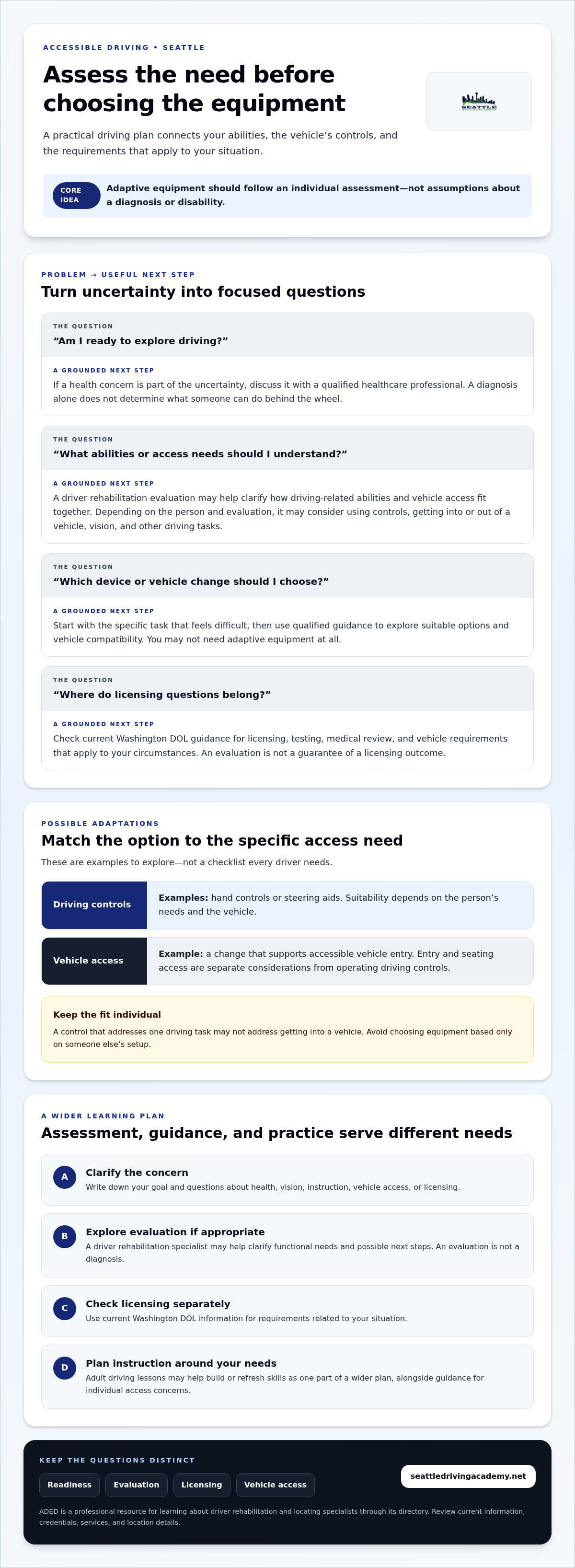
Exploring driving with a disability isn’t a single yes-or-no decision or simply a matter of choosing a device for a car. Start by understanding how your abilities, the vehicle’s controls, and Washington’s licensing requirements fit together. Those questions may call for different kinds of guidance.
Accessible driving means finding a safe, practical match between a person’s abilities, the controls they can use, and the licensing requirements that apply to their circumstances. Equipment can be part of that match, but it isn’t the whole process. You may also need to clarify readiness, whether an evaluation is appropriate, what the Department of Licensing (DOL) requires, and how vehicle access could affect your plan. The overview of driver rehabilitation describes how assessment, training, and adaptive equipment can fit into this broader process.
Disability experiences vary widely. A diagnosis alone doesn’t tell you what someone can do behind the wheel, what support may help, or which licensing steps apply. For some people, the first question is how a health or vision concern relates to driving. Others may be returning to driving, learning for the first time, or trying to understand whether vehicle controls need to change.
Does having a disability automatically mean you cannot drive?
No blanket assumption can answer that question for every person. Individual abilities, circumstances, and applicable requirements matter. For Washington licensing and medical-review information, consult current guidance from the Washington DOL. If you’re unsure how a health condition affects driving readiness, discuss your concerns with a qualified healthcare professional. You can take the process one question at a time.
Which questions should you clarify before starting?
Begin with your goal and the concern that prompted you to explore driving. A short written list can make conversations with healthcare professionals or the DOL more focused. Separate the topics so you don’t have to treat every issue as one decision.
- Your goal: Are you learning to drive, returning after a change in health, or exploring more independence?
- Your experience: Have you driven before, and what feels comfortable or difficult now?
- Access needs: Are you wondering about reaching controls, getting into a vehicle, or using particular vehicle controls?
- Instruction: Would general practice help you build or refresh driving skills? Adult driving lessons Seattle learners take can be one part of a wider plan, alongside guidance for individual access concerns.
- Licensing: What should you ask the DOL about testing, medical review, or licensing requirements for your circumstances?
Keep these topics distinct: readiness is about whether driving feels appropriate to explore; evaluation is about understanding abilities and support needs; licensing concerns belong with the DOL; and vehicle access is about practical fit. A clear question list can make the next conversation more manageable without asking you to solve everything at once.
How Driving Evaluations and Adaptive Equipment Can Shape Your Plan
Once you’ve identified what feels uncertain, resist the urge to start with a particular device or vehicle. A practical pathway is to define the concern, seek an appropriate evaluation if needed, explore recommendations, and plan instruction or practice around the findings. You may not need adaptive equipment. The purpose is to understand what support, if any, fits your individual situation.
Adaptive equipment should follow an individual assessment, not assumptions about a diagnosis or disability. A recommendation is most useful when it addresses a specific access or driving need and considers the vehicle you may use. This keeps the process focused on what works for you rather than a one-size-fits-all solution.
What can a driver rehabilitation evaluation consider?
A driver rehabilitation specialist is a relevant resource when you need help understanding how particular functional needs may affect driving or vehicle access. Depending on the person and the evaluation, areas considered may include using vehicle controls, getting into or out of a vehicle, vision, and other abilities related to driving tasks. An evaluation isn’t a diagnosis or a guarantee of a licensing outcome; it can help clarify questions and possible next steps.
The Association for Driver Rehabilitation Specialists (ADED) is a professional resource for learning about this field and locating specialists through its directory. Review current information, credentials, services, and location details when using a listing. For health-related concerns, a qualified healthcare professional can help guide personal questions.
What kinds of vehicle adaptations might be considered?
Possible adaptations vary. Examples include hand controls, steering aids, or changes that support accessible vehicle entry. These are options to explore, not a checklist every driver needs. A person who can use standard controls comfortably may not need equipment; another person may need to consider a different control arrangement or an easier way to enter the vehicle.
Suitability depends on the person’s needs and the vehicle’s compatibility. For example, a control that addresses one driving task may not address entry or seating access. Keep those needs distinct as you review recommendations, and use qualified guidance to understand which options apply to your circumstances. Avoid choosing equipment based only on someone else’s setup or a general description online.
Once you have clearer guidance, plan practice around the skills you want to build. General adult driving lessons Seattle learners take may fit into that broader pathway when appropriate, helping with ordinary driving skills while evaluation and equipment questions are addressed through relevant specialists. Seattle Driving Academy offers adult driver training and individual lessons as part of general driver education. Explore adult driver training as you consider how practice might fit your next steps.
Washington Licensing Questions: How to Navigate the DOL Pathway
Once you know what you want to clarify, separate licensing questions from lesson planning and vehicle access. The Washington State Department of Licensing (DOL) is the primary source for current licensing requirements. Its guidance can help you identify the right next question, but only the DOL can explain how its requirements apply to your individual circumstances.
When should you consult Washington DOL guidance?
Check DOL information when you need to understand the current process for applying, testing, medical review, or any requirement related to your circumstances. Procedures, forms, and terminology can change, so use the department’s current instructions rather than relying on an old checklist or someone else’s experience. A diagnosis or equipment choice alone can’t establish what licensing outcome applies to you.
To keep your research organized, separate official requirements from general educational information:
- Official licensing requirements: Use Washington DOL resources for application steps, testing procedures, medical-review questions, and vehicle-related requirements. Follow the current instructions relevant to your situation.
- General driving education: Driving lessons and practice can help you build skills, but they don’t replace DOL guidance or determine licensing eligibility.
- Personal health questions: Discuss medical concerns with a qualified healthcare professional, then consult the DOL about any licensing process that may apply.
If you’re unsure which DOL page or process fits your question, write down the exact issue, such as “What current instructions apply to my medical review?” or “What vehicle requirements should I understand before testing?” Focused questions make it easier to find relevant official information and prepare for follow-up.
How do lessons, testing, and vehicle access fit together?
These are connected, but separate, parts of a plan. Lessons support learning and practice. A driving test is an official assessment of driving skills under the applicable testing process. Vehicle access is about whether the vehicle and its controls suit your needs. Clarifying one area doesn’t automatically answer the others, so track each question separately and use the appropriate source for guidance.
Seattle Driving Academy provides adult driver training, individual driving lessons, official DOL knowledge and skill tests, and pre-test practice in Seattle. These general education and testing services may fit into a learner’s broader plan; they aren’t medical guidance or a determination about vehicle adaptations. A search for adult driving lessons seattle can help you explore general instruction, while the DOL remains the place to check current licensing steps.
As you compare lesson options, think about what you want practice to accomplish and how it fits with the separate questions you’re working through. This adult driving lessons guide can help you consider general lesson planning. Keep licensing and medical questions directed to the relevant official or qualified professionals, so each decision has the right support.
Seattle-Area Resources for Accessible Driving and Transportation
Different questions call for different sources. Official licensing guidance, help locating driver rehabilitation professionals, assistive technology information, and transportation options aren’t interchangeable. Use each resource for its stated role, then review current instructions and eligibility directly with the organization. A listing or referral doesn’t guarantee that a service is available or that you qualify.
Which official and specialist resources answer different questions?
Start with the source that matches your question. Washington State Department of Licensing information covers licensing and medical-review processes; ADED helps people locate driver rehabilitation resources. Washington and regional organizations may also be useful starting points for technology or financial support, but program details and eligibility depend on the resource.
| Resource | Role in your plan | Useful next step |
|---|---|---|
| Washington State Department of Licensing (DOL) | Official source for current licensing, testing, and medical-review information. | Use DOL’s current online guidance for the question you need answered, and follow its latest instructions. |
| Association for Driver Rehabilitation Specialists (ADED) | Professional resource for finding driver rehabilitation information and specialists. | Search its current directory, then review each listing’s credentials, location, and services. |
| Washington Assistive Technology Act Program (WATAP) | Provides assistive technology resources and expertise. | Explore its current resources or call 800-214-8731 to ask about relevant information. |
| Northwest Access Fund | Offers low-interest loans for adaptive vehicles and assistive technology. | Review current program details and eligibility directly with the organization. |
| King County Metro Access | Paratransit option for people unable to use regular transit. | Check current eligibility, service details, and reservation instructions through Metro. |
These organizations have different roles. ADED is a professional resource, not a licensing authority. WATAP and Northwest Access Fund can help you explore technology-related information or funding pathways, but their programs don’t determine whether you can drive. Review current forms, processes, contact details, and eligibility before making plans.
What if driving is not your immediate transportation option?
Accessible public transportation and paratransit can be separate ways to plan trips while you explore driving, continue practice, or wait for an answer to a licensing or vehicle question. They’re options, not a judgment about your driving goals. King County Metro Access is a local paratransit resource; use Metro’s current information to understand eligibility and service details before relying on it.
If you’re ready to build general driving skills alongside your wider plan, explore adult driving lessons in Seattle with Seattle Driving Academy.
Build Your Next-Step Plan for Driving with a Disability in Seattle
You don’t have to settle every question before taking a first step. A short, organized plan can turn a big goal into manageable conversations and decisions. Start with what you hope driving will make possible, then note what you need to learn about access, instruction, licensing, or a vehicle. Your next step should follow your situation, not someone else’s timeline.
A practical checklist before taking the next step
Before making calls or booking practice, take a few minutes to write down the details that will help guide your questions. Bring the list to relevant conversations and update it as you get answers.
- Clarify your goal: Note whether you’re learning for the first time, returning to driving, or working toward more confidence on the road.
- Describe your experience: Record what you’ve driven before and which situations or tasks feel comfortable, unfamiliar, or challenging.
- List access questions: Consider vehicle entry, seating, reaching controls, or other specific tasks you want to discuss. Don’t assume equipment is needed; describe the concern first.
- Separate professional questions: Write health-related questions for a qualified healthcare professional, licensing questions for Washington DOL, and evaluation questions for an appropriate specialist.
- Check the guidance: Review current DOL instructions and any recommendations from an evaluation before planning driving practice or testing.
Then map the answers to a realistic next step. If vehicle access or controls are still uncertain, address that before scheduling practice that depends on a particular setup. If you have the guidance you need and are ready to build general driving skills, consider what instruction aligns with your experience and goals. Keep licensing requirements, vehicle suitability, and learning plans connected, but don’t treat one as a substitute for the others.
Where general adult driving lessons fit
Standard adult lessons can help you learn or refresh road skills, build familiarity with traffic situations, and prepare for a driving test. Seattle Driving Academy offers adult driver training, individual lessons, pre-test practice, and official DOL knowledge and skill tests. These general training and testing services can be one part of a wider plan, not a replacement for individualized medical, adaptive-driving, or licensing guidance.
If a test is part of your goal, review the steps and considerations in this Seattle DOL testing center guide as you prepare. When you’re ready to work on general driving skills, explore adult driving lessons seattle learners can use to build experience in line with their learning goals. Start with the questions you’ve gathered, and take the next step that feels clear and supported.
Take Your Next Step at a Pace That Feels Right
You don’t need every answer before you begin. Choose one manageable next step, such as writing down a question for the Washington DOL, organizing your goals, or deciding which general driving skills you’d like to practice. Progress can be steady and still move you forward. The right plan respects your needs and gives you room to make informed decisions.
If practice is your next step, adult driving lessons seattle can help you build general road skills as part of your wider plan. Seattle Driving Academy is a Seattle-based adult driver training and testing center. Its lessons and official DOL testing services support adult learners preparing to develop skills or work toward a test; they’re one part of your pathway, not a substitute for individual medical or licensing guidance.
Explore adult driver training and take your next step with confidence. You can move forward one clear, supported decision at a time.
Frequently Asked Questions
Can you drive in Washington with a disability?
Possibly, but a disability alone doesn’t answer whether a person can drive. Individual circumstances and current Washington Department of Licensing (DOL) requirements matter. Check the DOL’s official guidance for licensing or medical-review questions, and speak with a qualified healthcare professional about personal health concerns. If you’re helping someone else, focus on their specific abilities and questions rather than drawing conclusions from a diagnosis. No online article can guarantee an eligibility decision.
Do I need a medical evaluation before learning to drive with a disability?
Not everyone follows the same process, so don’t assume that a medical evaluation is always required or never needed. If a health concern could affect your ability to learn or drive, discuss it with an appropriate healthcare professional. For licensing requirements or questions about medical review, consult current Washington DOL instructions. You can ask what information is needed before arranging lessons, which may help you plan without treating learning and licensing as the same step.
What is a driver rehabilitation specialist?
A driver rehabilitation specialist is a professional resource who can help assess driving-related abilities and needs, and consider what support may be appropriate. The scope of services can differ, so review the specialist’s current credentials and experience in the area relevant to your question. ADED, the Association for Driver Rehabilitation Specialists, offers information about the field and a resource directory. Review current listings, services, and location details before making plans.
Can a car be adapted for a driver with a disability?
Yes, some vehicles can be adapted with different control or access options, but a particular setup won’t suit everyone. For example, a driver may want to explore changes related to operating controls or entering a vehicle. The right choice depends on the person’s needs and the vehicle itself. Seek individualized recommendations, then confirm compatibility and follow relevant safety guidance before relying on an adaptation for driving.
How do I find accessible driving resources in Seattle?
Use Washington DOL resources for licensing information and ADED to explore driver rehabilitation professionals. For assistive technology information, Washington Assistive Technology Act Program (WATAP) is another resource to investigate. These organizations serve different purposes, so begin with the question you need answered. Review current Seattle-area services, contact pathways, and eligibility through authoritative sources, especially before making decisions based on a directory entry or older online information.
Can an adult with a disability take driving lessons in Seattle?
Adult lessons may be one part of a broader plan, and learning needs vary from person to person. Seattle Driving Academy offers general adult driver training and individual lessons, along with official DOL knowledge and skill tests. These services can support practice and test preparation, but they don’t replace individualized medical guidance, adaptive-driving evaluation, or official licensing decisions. Search for adult driving lessons seattle as you consider how general instruction might fit your goals.
What if I cannot drive right now but need accessible transportation in Seattle?
Accessible public transit and paratransit may offer separate transportation options while you consider driving or work through next steps. King County Metro Access serves eligible people who are unable to use regular transit, but eligibility and service details depend on current program rules. Check Metro’s latest Access information before planning a trip, and consider your route and access needs. Exploring transportation options doesn’t require you to give up a future driving goal.


